
The 26 sectors specified by the RBI include automobiles, power, tourism, cement, chemicals, gems and jewellery, logistic, mining, manufacturing, real estate, and shipping among others.

Younger customers should opt for increasing cover as their financial commitments are likely to rise in the future.

For any airline to be eligible for restructuring, the current ratio has to be equal to or higher than 0.4, while 'debt to Ebitda' has to be equal to or less than 5.5.

All real estate developers may not be able to avail the benefit of Reserve Bank of India's one-time restructuring scheme as they might not meet the required financial ratios and have the necessary credit rating, HDFC vice chairman and CEO Keki Mistry said. He was speaking at a real estate and infrastructure investor summit organised by Naredco. "Restructuring may not necessarily help every developer because not too many will be able to meet the criteria laid down in terms of meeting the various ratios and getting credit ratings," Mistry said.

The net leasing of Grade-A commercial office space in India will stagnate this financial year at 32-34 million square feet, with global uncertainties brewing caution among key tenant categories, according to the latest Crisil Ratings report. Major seven cities in India - Bengaluru, Chennai, Hyderabad, Kolkata, Mumbai Metropolitan Region (MMR), National Capital Region (NCR) and Pune - had Grade-A office space with an operational stock of around 705 million square feet as of March 2023. India's commercial office space is dominated by technology companies, with information technology (IT) and IT-enabled services (ITeS) companies occupying 42-45 per cent of the operational stock.

67 companies with total debt of Rs 5.65 lakh cr were either loss-making or didn't generate enough profit to cover interest cost in FY15

The second wave of the coronavirus pandemic is likely to delay recovery in air passenger traffic with an 80-85 per cent growth year-on-year this fiscal against the earlier estimate of 130-135 per cent, ratings agency ICRA said on Monday. The domestic passenger traffic, which witnessed a steady ramp-up after resumption of airport operations since May 25 last year and reached 64 per cent of the previous year levels in February, has again suffered a setback, the ratings agency said in a report. The spike in coronavirus infections towards March-end and April has resulted in several state governments implementing fresh restrictions, resulting in a marginal 0.7 per cent de-growth sequentially in traffic in March.

Some of the top indebted companies likely to face financial headwinds in the coming quarters include NTPC, PowerGrid, Tata Steel, Adani Power, JSW Steel, UPL, and Steel Authority of India. Together these 201 companies owed Rs 14.9 trillion to their lenders at the end of September 30, 2019, up 4.1 per cent year-on-year (YoY) during the first half of FY20.

M-cap of 35% of BSE-500 companies, excluding financial ones, is below their debt or just a shade above

The problem is actually acute in the diamond jewellery industry where there is no uniform criteria of inventory valuation unlike gold, whose prices are uniform and widely quoted.

The past 18 months have seen a resurgence in the real estate industry, with developers regaining the ground lost to the Covid-19 pandemic. But it is once again adding inventory at a pace faster than sales. The industry's inventory rose by 28 per cent year-on-year (Y-o-Y) in H1FY24, com-pared to a 25.5 per cent year-on-year increase in net sales during the same period.


The hit to economic activity will be mostly confined to the first quarter. And a third wave, if it materialises, is unlikely to be hugely disruptive for the economy, predicts T T Ram Mohan.

Indian companies struggle to escape debt burden as profit slows.

Indian companies are in a precarious financial position.
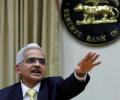
'The banking sector appears to be on course to recovery,' declares the RBI governor.

The trust deficit has widened with buyers losing confidence in a developer's ability to construct and deliver a project on time.

Jio's disruptive strategy, including free voice services and data at throwaway rates, apart from offering all services free for six months, triggered a consolidation in the telecom sector.

Exposure to debt funds and gold is essential even if current returns from these asset classes are low, suggests Sanjay Kumar Singh.

Govt wants to up investment in Railways

Enhanced revenue generation is a priority for the government.

The Modi government has handled inflation far better than any government in the past two decades. Both the stock market and currency indices have begun to show confidence in the economy, despite the mounting global headwinds of trade.
.jpg)
Q1 results indicate more pain ahead, as slowdown has spread to more sectors, pricing power has come down and rising interest cost is eating into profits.

The biggest disappointment was the compromise on the promised corporate tax reduction path.

Indian Railways has plans to decongest network and become more self dependent.
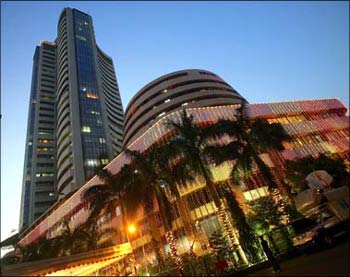
'There is no change in the overall story of economic recovery.'
 © 2026 Rediff.com - Advertise with us - Disclaimer - Privacy Policy - Sitemap - Feedback - About us - Terms of use - Grievances